Rick Simpson Oil (RSO) doesn’t only come in one form. Some products are sold as thick oil in a syringe, while others are infused into edibles like gummies or capsules. Even though both contain RSO, they can feel very different to use.
The format changes how much you take at once, how easy it is to measure a dose, and how quickly it fits into a daily routine. For people using RSO regularly, those small differences can add up.
This guide looks at RSO syringes and RSO edibles side by side, focusing on how they compare in dosing, onset time, and ease of use, so you can choose the option that makes the most sense for you.
RSO Syringes vs Edibles: At a Glance
| Feature | RSO Syringes | RSO Edibles |
| Form | Thick, concentrated oil in a dosing syringe | RSO infused into gummies, chocolates, or capsules |
| How it’s taken | Placed under the tongue, on food, or into capsules | Chewed and swallowed like a regular edible |
| Dose control | Very high – can measure tiny amounts | Fixed per piece (set milligrams per serving) |
| Typical potency per serving | Varies by dose measured; often 20-100+ mg per dose depending on how much oil is used | Usually 5-25 mg per piece, depending on gummy or capsule strength |
| Taste | Strong, earthy, plant-like | Flavor is masked by sugar or chocolate |
| Onset time | ~15-45 minutes (under tongue); ~45-90 minutes if swallowed | ~45-90 minutes (must digest first) |
| Duration | ~6-8 hours when swallowed | ~6-8 hours, similar to other edibles |
| Ease of use | Requires measuring and handling oil | Simple and pre-measured |
| Cost per milligram | Often $0.03-$0.10 per mg | Often $0.10-$0.25 per mg |
| Best for | People who want full control over dosing | People who want consistency and convenience |
What Is an RSO Syringe?

An RSO syringe contains Rick Simpson Oil in its most concentrated form. The oil is thick, dark, and fully extracted from the cannabis plant, then packaged in a plastic or glass dosing syringe so it can be measured in small amounts.
Unlike edibles, which mix RSO into food, a syringe holds only the oil itself. This allows the user to control exactly how much is taken at one time. The syringe is marked with measurement lines, making it possible to dispense very small portions or larger doses as needed.
RSO from a syringe is typically swallowed, placed under the tongue, or added to food or capsules. Because it is not diluted into a gummy or chocolate, the oil keeps its original concentration and full plant profile.
Many people choose RSO syringes because they want flexibility. The same product can be used for microdosing or for higher daily intake, depending on the amount dispensed. This makes syringes a practical option for those who need to adjust their dose over time rather than rely on a fixed serving size.
What Are RSO Edibles?
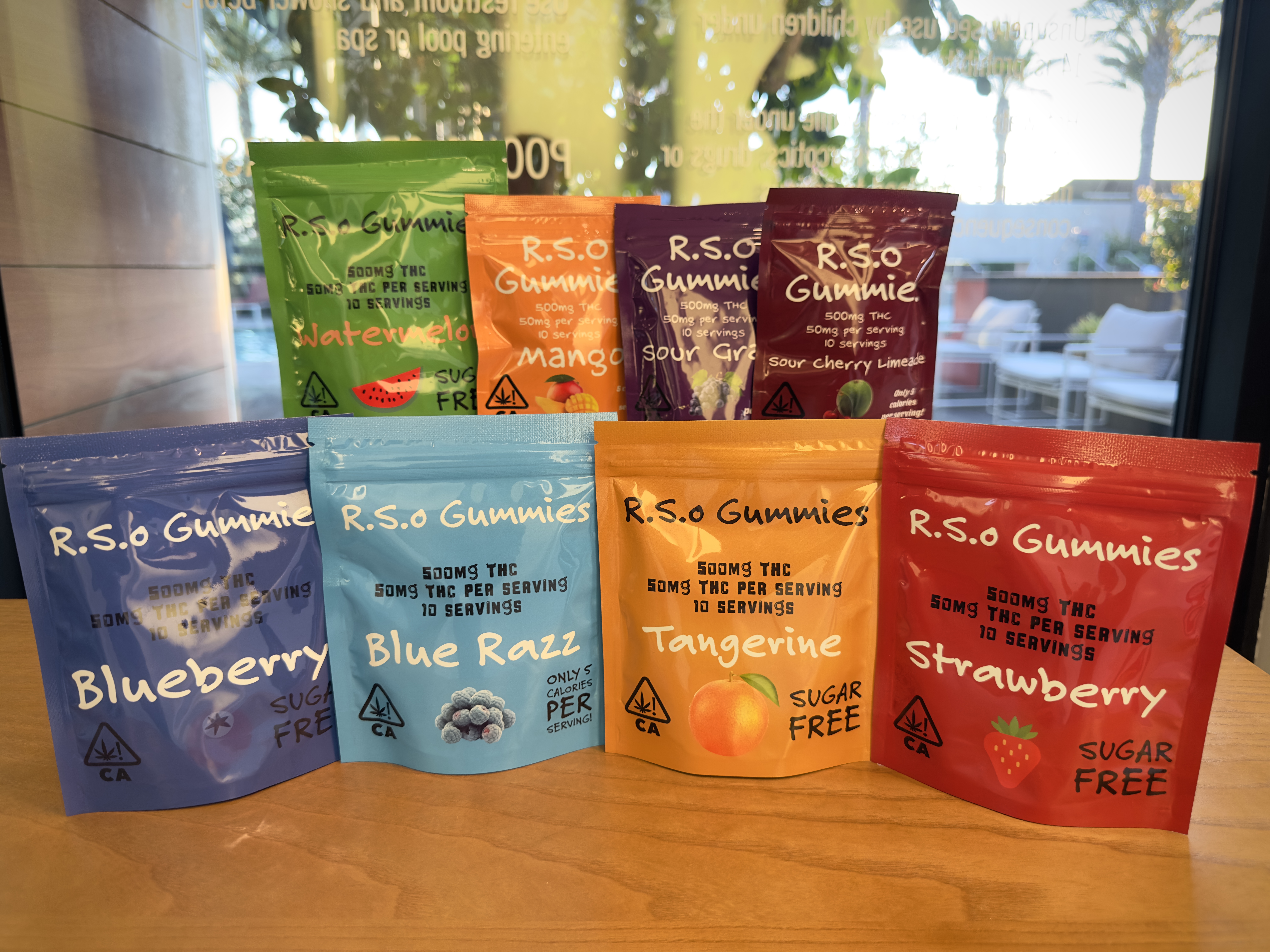
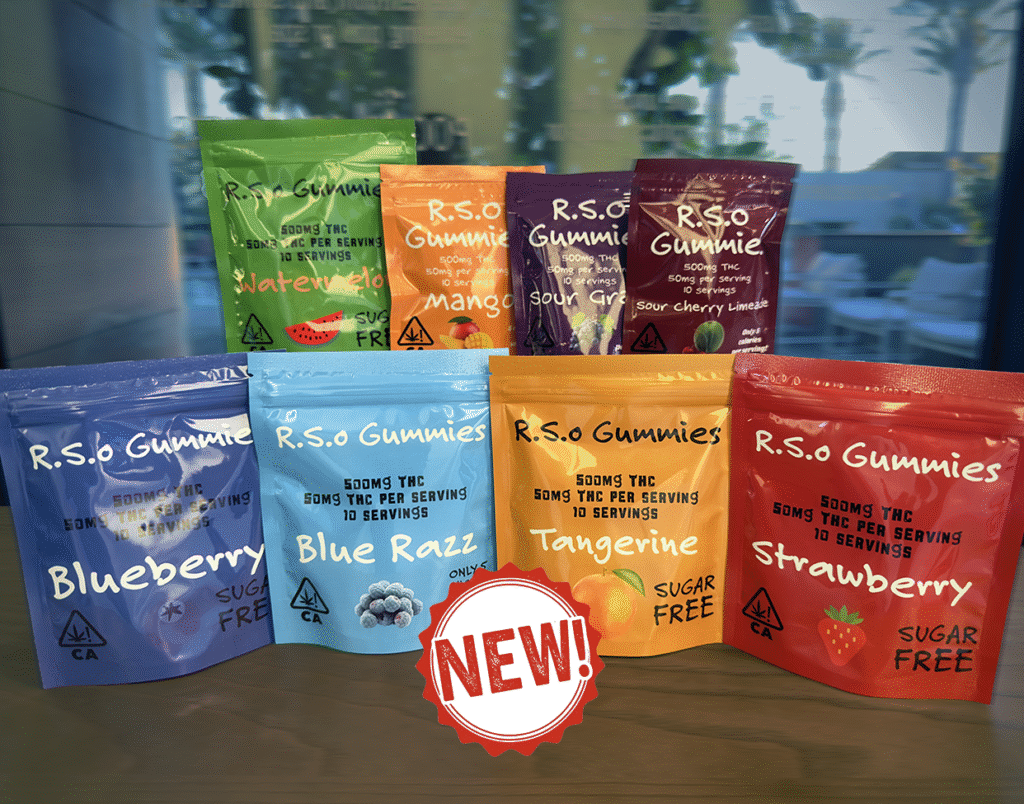
An RSO edible is Rick Simpson Oil that has been infused into a food-based product, most commonly gummies, chocolates, candy, or capsules. Instead of measuring oil directly from a syringe, the dose is already mixed into each piece during production.
This format turns concentrated RSO into a pre-portioned serving. Each gummy or capsule contains a set amount of oil, which makes dosing more predictable from one use to the next. Rather than adjusting the amount manually, the user chooses how many pieces to take based on the listed milligrams per serving.
RSO edibles are swallowed and processed through digestion, similar to other cannabis edibles. Because the oil is combined with sugar, gelatin, or other ingredients, the natural taste of RSO is largely masked. This can make edibles easier to tolerate for people who dislike the strong, earthy flavor of the oil itself.
Many people choose RSO edibles for convenience. There is no need to handle thick oil, measure doses, or prepare capsules. The tradeoff is less flexibility, since the amount of RSO in each piece is fixed by the manufacturer rather than adjustable by the user.
RSO Syringes vs Edibles: Key Differences
Although both products contain Rick Simpson Oil, the way they are used creates different day-to-day experiences. The main differences come down to how flexible the dose is, how quickly it takes effect, and how easy it is to use consistently.
Benefits & Effects
RSO syringes allow for a more customizable experience. Because the oil is taken directly from the syringe, the amount can be adjusted in very small increments. This makes it easier to increase or decrease intake over time.
RSO edibles tend to feel steadier and more predictable. Each piece contains a set amount of oil, so the effect from one serving is usually similar to the last. This consistency can be helpful for people who prefer not to measure or adjust doses manually.
Onset Time
When swallowed, both RSO syringes and RSO edibles usually take about 45 to 90 minutes to begin working, since they must pass through digestion before entering the bloodstream.
RSO from a syringe can also be taken under the tongue. When used this way, onset may occur sooner – often within 15 to 45 minutes. Edibles, which are fully digested, tend to feel slower at first but may last longer overall, often around 6 to 8 hours.
Ease of Use
RSO syringes require more hands-on use. The oil must be measured, dispensed, and taken directly or added to food or capsules. This extra step can take some practice.
RSO edibles are simpler by design. They are taken the same way as any other edible, with no measuring or preparation. This makes them easier to use for people who want a straightforward routine.
Dosing Control
Syringes offer the highest level of dose control. Very small amounts can be dispensed, making them useful for gradual adjustments or microdosing.
Edibles are limited to the amount set by the manufacturer. The dose is locked into each piece, so changes usually mean taking more or fewer gummies or capsules rather than adjusting the oil itself.
Taste
RSO from a syringe has a strong, earthy, and sometimes bitter flavor. The taste reflects the concentrated nature of the oil and is often noticeable when taken directly.
RSO edibles mask much of that flavor with sugar, chocolate, or other ingredients. This can make them easier to tolerate for people who find the taste of RSO unpleasant.
Cost
RSO syringes are usually more cost-effective because they contain only concentrated oil. On average, they often work out to roughly $0.03 to $0.10 per milligram, depending on strength and quality.
RSO edibles generally cost more per milligram due to infusion, flavoring, and packaging. Many products fall closer to $0.10 to $0.25 per milligram, reflecting the added convenience of pre-measured servings.
What to Look for When Buying RSO Syringes and Edibles
No matter which form you choose, start with labeling and testing. Products should include third-party lab results and clearly list how much RSO they contain. This makes it easier to compare options and avoid guessing about potency.
Ingredient lists matter as well. RSO syringes should contain only cannabis extract, without added fillers. RSO edibles will include food ingredients, but simpler formulas are usually easier to tolerate and use consistently.
From there, the details depend on the format. With RSO syringes, look for thick, concentrated oil and a syringe with easy-to-read measurement markings so small amounts can be dispensed accurately. Proper packaging also helps protect the oil from heat and light.
With RSO edibles, focus on portioning and consistency. Each piece should list a specific milligram amount, and the total cannabinoid content of the package should be easy to find. Edibles should also be packaged to prevent melting or degradation.
Paying attention to these basics helps ensure that whichever form you choose matches what it claims to be and fits into a regular routine.
Which Option Makes More Sense?
People usually choose between RSO syringes and RSO edibles based on how much control they want and how hands-on they are willing to be.
RSO syringes tend to make more sense for people who:
- Want to adjust the amount they take in very small increments
- Prefer using pure, undiluted RSO oil
- Are comfortable measuring doses themselves
- Do not mind the natural taste of the oil
RSO edibles may make more sense for people who:
- Want a pre-measured serving each time
- Prefer a product that is easier to take consistently
- Want the flavor of RSO masked by food ingredients
- Do not want to handle concentrated oil directly
Dosing Tips: Start Low, Go Slow
RSO is highly concentrated, whether it comes in a syringe or an edible. Because of this, it is usually best to begin with a small amount and increase gradually over time.
With RSO syringes, this often means dispensing a very small portion and seeing how it feels before using more. With RSO edibles, it usually means starting with one piece or a partial serving rather than multiple at once.
Edible forms of RSO take longer to take effect, so it is important to wait long enough before increasing the amount. Taking more too quickly is one of the most common mistakes.
Moving slowly makes it easier to understand how your body responds and helps avoid taking more than intended.
Safety and Side Effects
RSO is highly concentrated, whether it comes in a syringe or an edible. Because of this, taking too much at once can feel uncomfortable, especially for people who are new to edible cannabis products.
Common side effects may include drowsiness, dizziness, dry mouth, and changes in appetite. Some people may also feel uneasy or overly sedated if they take more than intended.
RSO may not be suitable for everyone. Anyone who is pregnant, sensitive to cannabis, or taking prescription medications should be cautious and consider speaking with a qualified healthcare professional before use.
Storing RSO products safely is also important. Both syringes and edibles should be kept out of reach of children and pets and stored according to package instructions.
Conclusion: RSO Syringes vs. Edibles
RSO syringes and RSO edibles both deliver the same core extract, but they serve different purposes. Syringes offer flexibility and control, allowing the amount taken to be adjusted in small increments. Edibles provide convenience and consistency, with pre-measured servings that are easier to use from day to day.
Choosing between the two comes down to how much control you want over dosing and how simple you want the process to be. Some people prefer the hands-on nature of pure oil, while others value the ease of a ready-made edible.
If you are looking for authentic Rick Simpson Oil products from a trusted source, RickSimpsonOil.com offers both RSO syringes and RSO edibles made to consistent standards and clearly labeled for potency. Explore the available options to find the format that best fits your routine.
RSO Syringes vs. Edibles: Frequently Asked Questions
Here are answers to common questions about using RSO in syringe form versus edible form.
Is RSO the same as edibles?
RSO is not the same as edibles because RSO is a concentrated cannabis oil, while RSO edibles are food products infused with that oil. In other words, edibles can contain RSO, but RSO itself is not an edible.
How strong is RSO compared to edibles?
RSO from a syringe is usually stronger per serving than RSO edibles because it is undiluted oil, while RSO edibles divide the same extract into fixed portions. A measured dose from a syringe can contain more cannabinoids than a single gummy or capsule.
Can you eat RSO straight from the syringe?
Yes, RSO can be eaten straight from the syringe by placing it directly in the mouth or onto food. Many people choose to mix it with food or use capsules to make it easier to take.
Is RSO or distillate better for edibles?
RSO and distillate are both used to make edibles, but they are processed differently. RSO keeps more of the original plant compounds, while distillate is more refined and has a milder taste, so the choice often depends on whether flavor or full-extract oil is preferred.
How long does it take for an RSO syringe or edible to kick in?
When swallowed, both RSO from a syringe and RSO edibles usually take about 45 to 90 minutes to take effect. If RSO from a syringe is used under the tongue, onset may happen sooner, often within 15 to 45 minutes.